






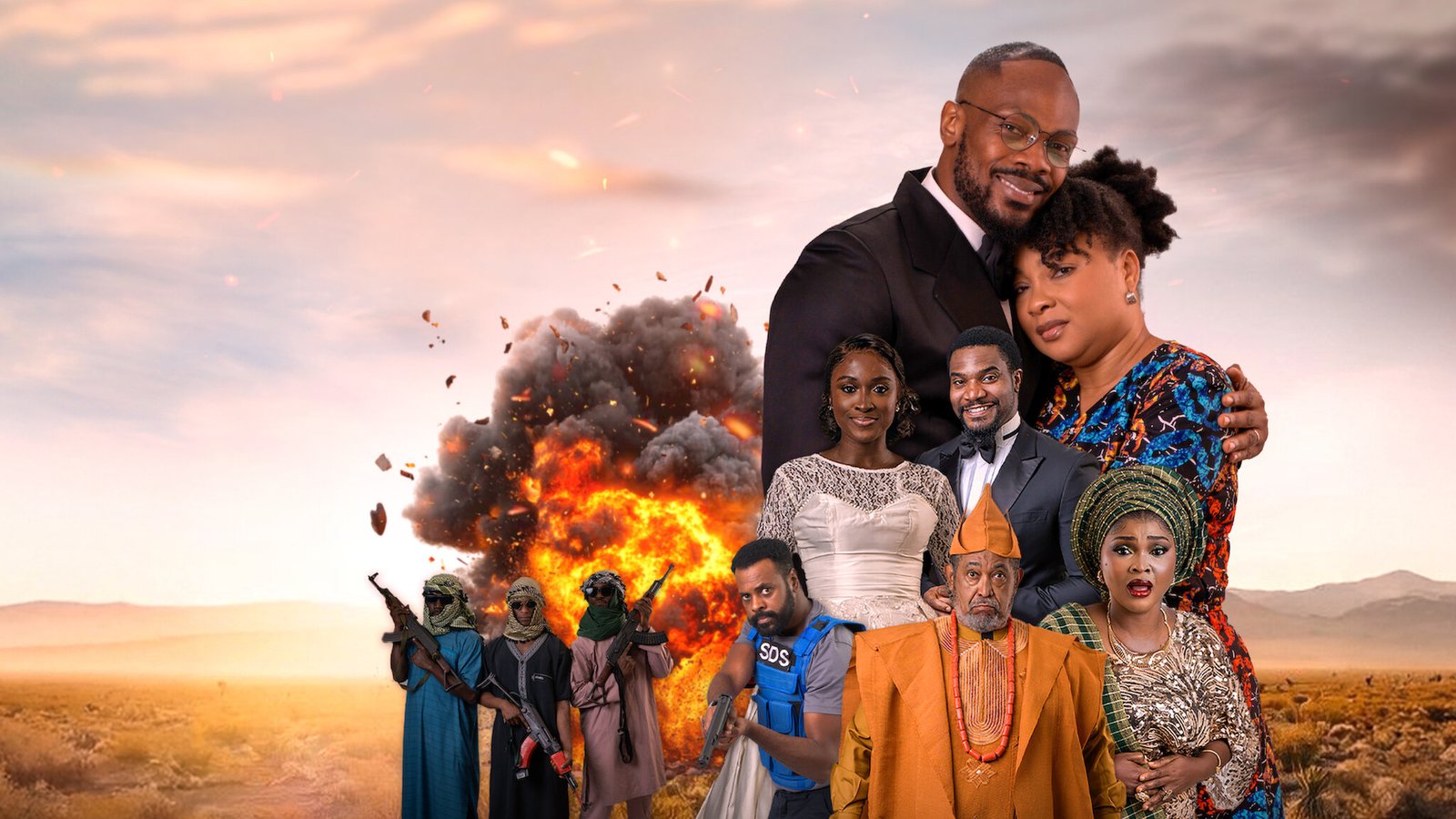
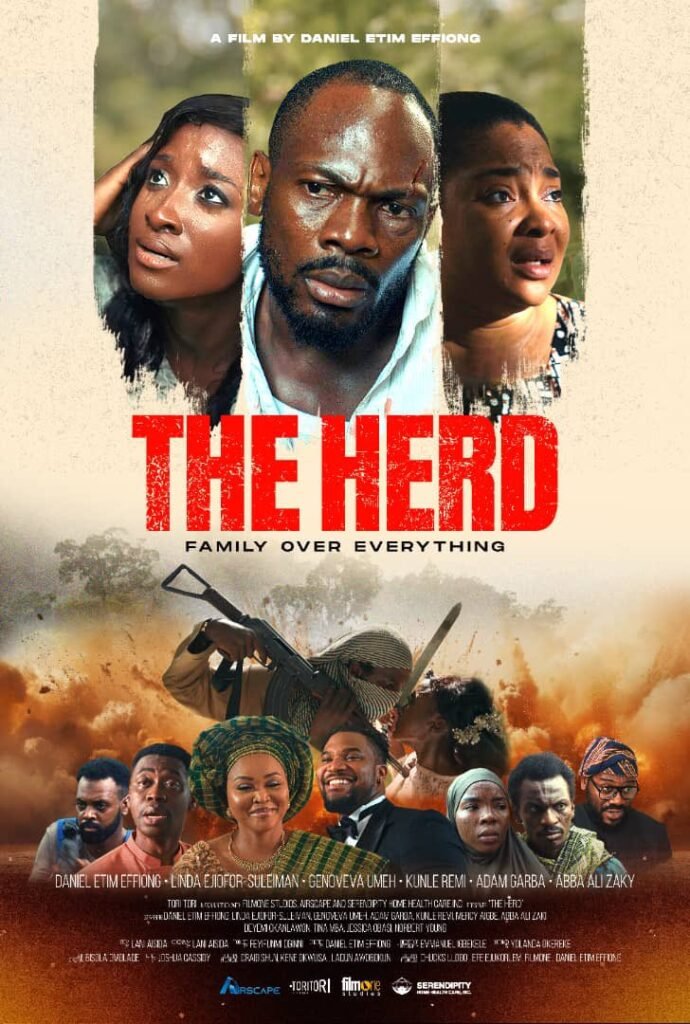
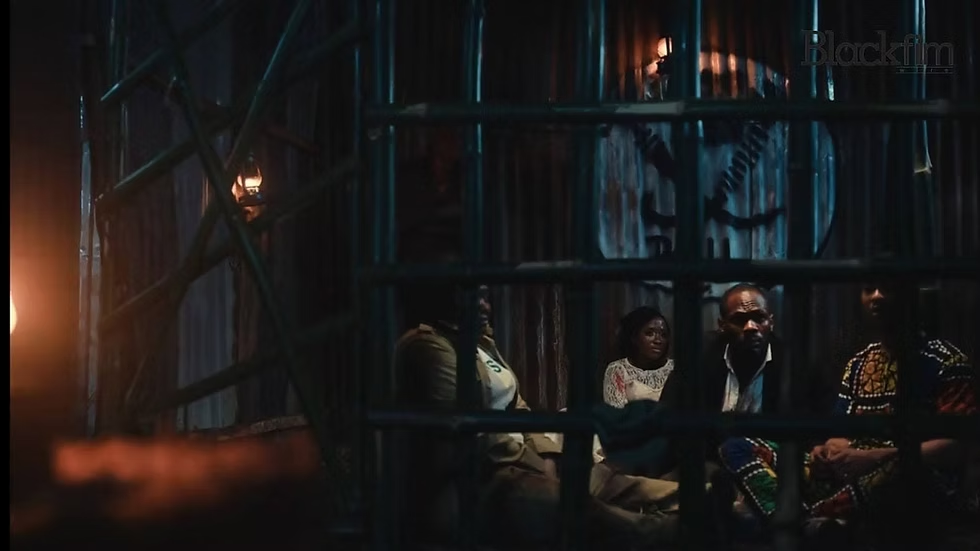
Gosi is attending his friend’s wedding in Ekiti State, Nigeria, but things take a dark turn when Gosi, the newly married couple, and others are kidnapped by gunmen disguised as cattle herdsmen.
Since it was released on Netflix, The Herd continues to spark controversy because it sheds light on the issue of herdsmen killings and kidnapping that has plagued so many parts of Nigeria in the last few years. This film comes at a time where even the international community is paying attention to the killings and rising insecurity in Nigeria, thus fueling discussions online and offline.
However, when we look at The Herd as a film in its own right: what worked and what did not work?
What Did I Like?
I liked the story and the way the story was presented. It’s timely, relevant, but beyond that, it boldly dramatizes the kidnapping crisis that has become the fear of everyday Nigerians traveling by road across the country.
Acting and casting were the biggest highlights of this film. I liked Genovevah Umeh’s performance; she is constantly showing us how talented and how versatile she is as an actress. Daniel Etim Effiong delivered one of his best performances in this film, while also directing the movie as a first-time Director, this feat must be applauded. That takes courage, guts, and sheer will. He bet on himself, and I’m glad it paid off.
But the real stars of the movie The Herd are the Herdsmen/Kidnappers. Halil, played by Abba Ali Zaky, the bloodthirsty Annas, played by Ibrahim Abubakar, and Habiba, played by Amal Umar. Their realistic portrayal gave me chills. It was effortless, truly terrifying, and believable.
I liked the setting of this film. Things like the Cows crossing the road and the bush scenes made it look as authentic as possible. It couldn’t have been easy shooting in such a space at night, but they did a great job. I really liked the nighttime scenes , especially because there were no fluorescent lights shining from nowhere or warm yellow lights magically casting a glow in places that were supposed to be dark.
I liked makeup and costumes. It was fitting, not overdone, and consistent.
I liked that they carried us along to a large extent. What do I mean? I mean we were emotionally invested. You’ll feel so many things while watching this film, but indifference would definitely not be one of them. How can you be indifferent when every scene reminds you that this is what the country has turned to, this is the reality of so many: while we have been carrying on with our lives, countless young lives have been cut short, innocent dreams have been buried, and families crushed by grief.
I thought The Herd was very diverse in its portrayal. Multiple languages, different tribes, and even religions. The characters spoke Hausa, Igbo, Yoruba. The herdsmen were Muslims, but the people who were involved in body parts trafficking were Christians. The Herdsmen were northerners, but they had an accomplice who was Yoruba. Even in the midst of the most unfortunate situation, Gosi’s parents could not let their ethnic/tribal bias go. I think The Herd tried really hard to show that Nigeria is plagued by multiple issues, and no tribe or religion really gets to take the moral high ground.
What Were the Issues?
I think the biggest issue with this film was the police and the investigation. This film, unlike others, portrays the Nigerian police in a good light; however, what is worth doing at all is worth doing well.
I did not really like how they handled the pastors’ interrogation. When they got to the address the pastors gave them and met something else, they did not try to interrogate them, look around, or even stake out to watch the place from afar.
But the one that stressed me out the most was the scene where the police met Adamma. We did not know what their plan was, and in fact, it did not seem like they had an extraction or a negotiation plan. They did not go to the drop-off location with any money or any of the families they were working with. So what exactly were they doing there? Just waiting hoping someone else would show up to drop off money? They did not know what they were doing, as the audience, we did not know what they were trying to achieve either, and Gosi could have been killed because of their recklessness.
Or was it not ridiculous that the police officer just started running after the boys moving the money? He was not even trying to blend in, so I was not sure what they were trying to achieve by running after the money like that.
The two police officers finally find the 2 bandits (their only connection to the other criminals and the hostages by the way), then they go ahead to engage in this senseless shoot-out and killed the both of them. As in, the lead police officer climbed a rock and shot the guy in the head. Then he started screaming, “We’re clear, Niji.” Clear how? Clear for what? What’s next? Are you okay? How does this bring you closer to the kidnappers and the hostages? What is your plan???? See, at that point, I was convinced that one or both police officers were working with the kidnappers, because how do you explain this level of ineptitude?
When the film ended and I realized none of them was working with with the kidnappers, they were just doing nonsense for free, I was shocked, because they really should not be in the force with that kind of brain.
I thought attention to details was not the best. Some examples I can mention: when Adamma went to the Bank and she looked up at the entrance, instead of the name of the Bank, there was this blurred-out edit effect that someone probably forgot to take out.
When Gosi was cutting Fola into pieces with a cutlass, even though blood was splashing everywhere, the cutlass did not have blood on the blade or dripping from it.
There was something about the location that also confused me a bit. Habiba told Adamma to drop the Ransom off at an address in Kogi State. We know this film was set in Ekiti, and the money and bandits were all in Ekiti, so I’m not really sure how Kogi entered the conversation: maybe it was just a slip of tongue that nobody caught.
Another issue I had with this film was that, it seemed like there were too many unrealistic occurrences. First, Gosi’s parents: I think in the bid to fit in so many societal ills, they stretched some things, because it was weird that his parents did not show any single emotion after hearing that their son was in danger, not even one sign of concern. Mind you, they did not hate their son, they just did not like his choices, and they thought it was for his own good for him to follow their own advice about whom to marry. So, their reactions should have been more nuanced. Yes, they would gloat because he was being punished for not listening to them, but there should have also been that right mix of concern and fear for his wellbeing. I personally did not think that part of the story was properly thought out.
Also, every time people escaped in this film, it looked ridiculous. I mean the Youth Corper who just stood up and ran away and also the scene where Gosi and Derin just ran past all those men. Let’s not forget that Derin was still wearing that long wedding dress. And that was another thing that I thought was veryyyyy unrealistic: the fact that she wore that wedding dress with the tight corset that she refused to take off and her wig all through did not look right.
I must say that seeing the white wedding dress become dirty and filthy over the period was quite symbolic, but having the voluminous skirt and the tight corset removed would have been even more effective. Because where is your self-preservation? How are you running around holding that bulky wedding dress? Even the bandits would not have allowed her keep it; there’s no dignity in captivity.
The way the film ended was also a little underwhelming. Gosi managed to call his wife, he did not know where they were so he could not describe it to them so how did the Police find them??? The police officer said “we are on our way.” On your way where? It would have been more realistic for the roadside trader to help them by providing that information, but instead, she started shouting “thief” and ran away. That part did not really work for me.
Somehow, in a short time, the police managed to find the exact random spot in the bush where they were standing in the middle of nowhere… errrr, OK.
The part where that random hostage had to stone Halil was also not really great.
Moving on, I thought there were too many parts of the story that were just forgotten and not resolved. For example, the police officer’s wife was in the hospital, and he did not have money to pay the hospital bills. It would have been nice to see that concluded.
The Pastors: we never got to see what eventually happened and how that ended. It seemed once they used them to drive the plot forward, they just forgot about them. It would have been nice for them to close it out nicely.
Gosi committed fraud. The anti-fraud unit should have been alerted and waiting for him when he got to the Ekiti station. That would have been a more appropriate ending than his parents just standing from afar with no emotion whatsoever, like their son did not just escape death, saying “a deal is a deal.”
The other kidnapped people were completely forgotten. After the police found Gosi and Derin, they should have tried to locate the others, since that meant they were close by, but they just went back to the police station like those two were their only business, like those two were the only victims.
This brings me to the last issue I had about this film.
Even though it was supposed to be a rude awakening of some sort for us as Nigerians, I personally thought the story was told from a place of privilege. It only focused on the rich ones who could afford to pay ransom. They only showed us phone conversations between the kidnappers and Gosi’s wife, then the couple’s parents, who were also well to do. I think The Herd missed the opportunity to zero in on people on the other side of the financial scale, which makes up the majority of everyday Nigerians, by the way. People who have been kidnapped but got killed because there was nobody to call, and even if they called anyone, they were just too poor to raise that kind of money, so they just died. This was the opportunity to give them names, give them faces, make their stories painfully real, but The Herd made them faceless and nameless hostages. They are people who are also crying for help. People often times forgotten… so imagine my disappointment when this film, that should have been an unflinching and deeply emotional and honest depiction, does the same: forgetting about them.
Some films make you pause and reflect, but some films like The Herd light a fire in your belly, makes you angry, forcefully shakes you from a state of detachment because those issues that used to seem so far removed now feel so real, so close. Films like this create that feeling of outrage against injustice and I strongly believe that this type of emotional impact is one of the reasons why film remains a powerful and essential form of art.
Overall, The Herd was a good watch for me. It had its flaws, but was held together by stellar performances and tense atmosphere and good direction. Daniel Etim Effiong, with his directorial debut, did a commendable job. As far as Nollywood is concerned, The Herd might be the most socially relevant film released in 2025.
Rating: 7/10
Read the review of Reel Love here.
We have a fun and vibrant community on Instagram and Twitter, you can also join the conversation there or Subscribe to our YouTube Channel!